∎ Sense
Extended perception. Feel life signs through walls, read emotional residue from objects, perceive nearby threats through fog and darkness. Cost: gradual vision degradation.
Eight interlocking systems do most of the work, plus the Wrought — one optional path that costs more than it gives. None of them are survival-lite. None of them have a clean answer. Tradeoffs generate the game's best stories — not scripted events.
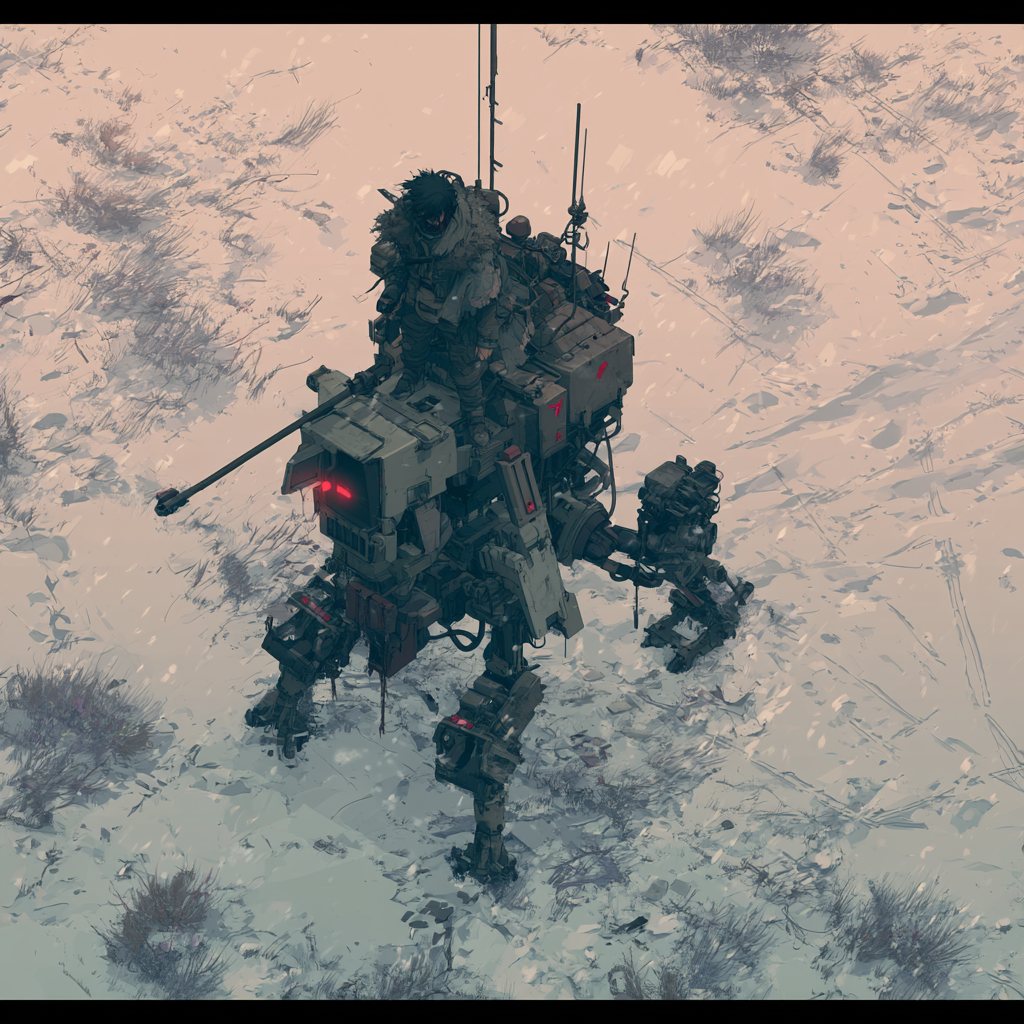
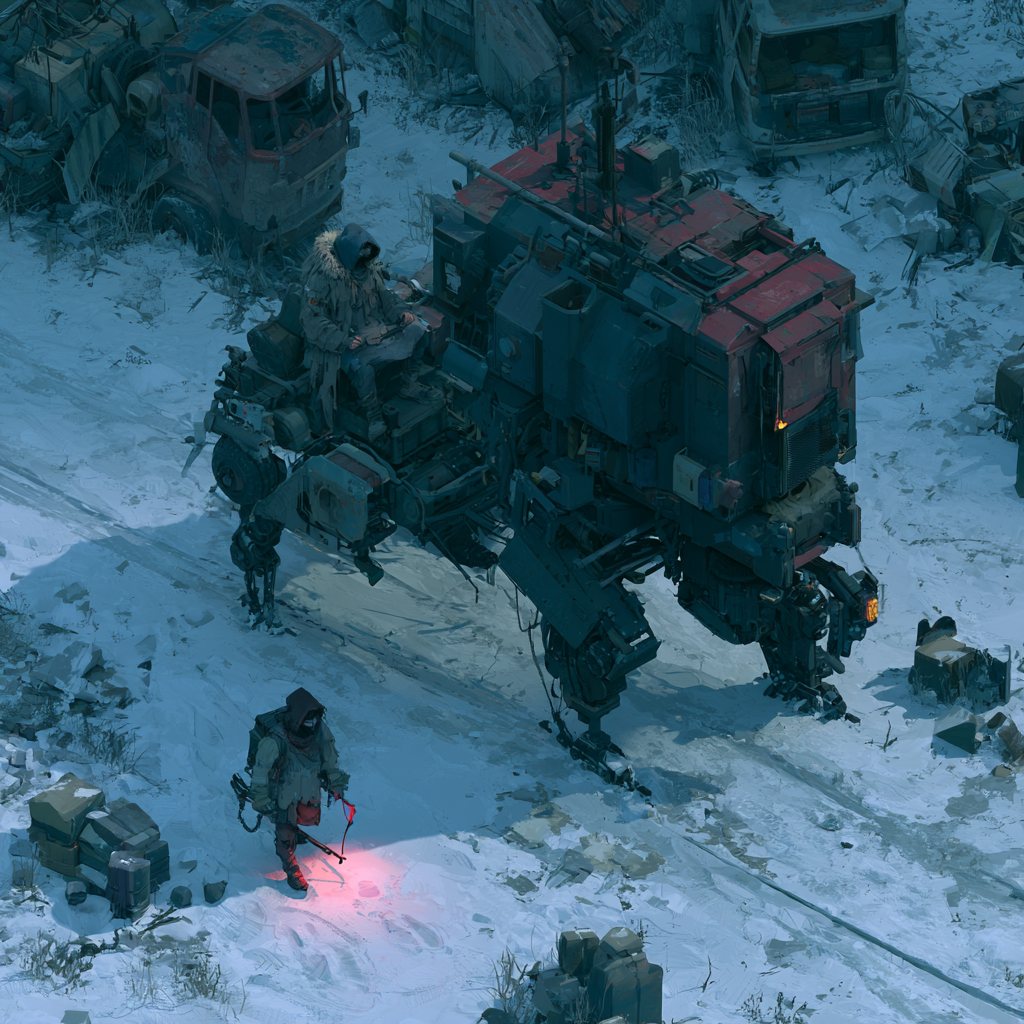
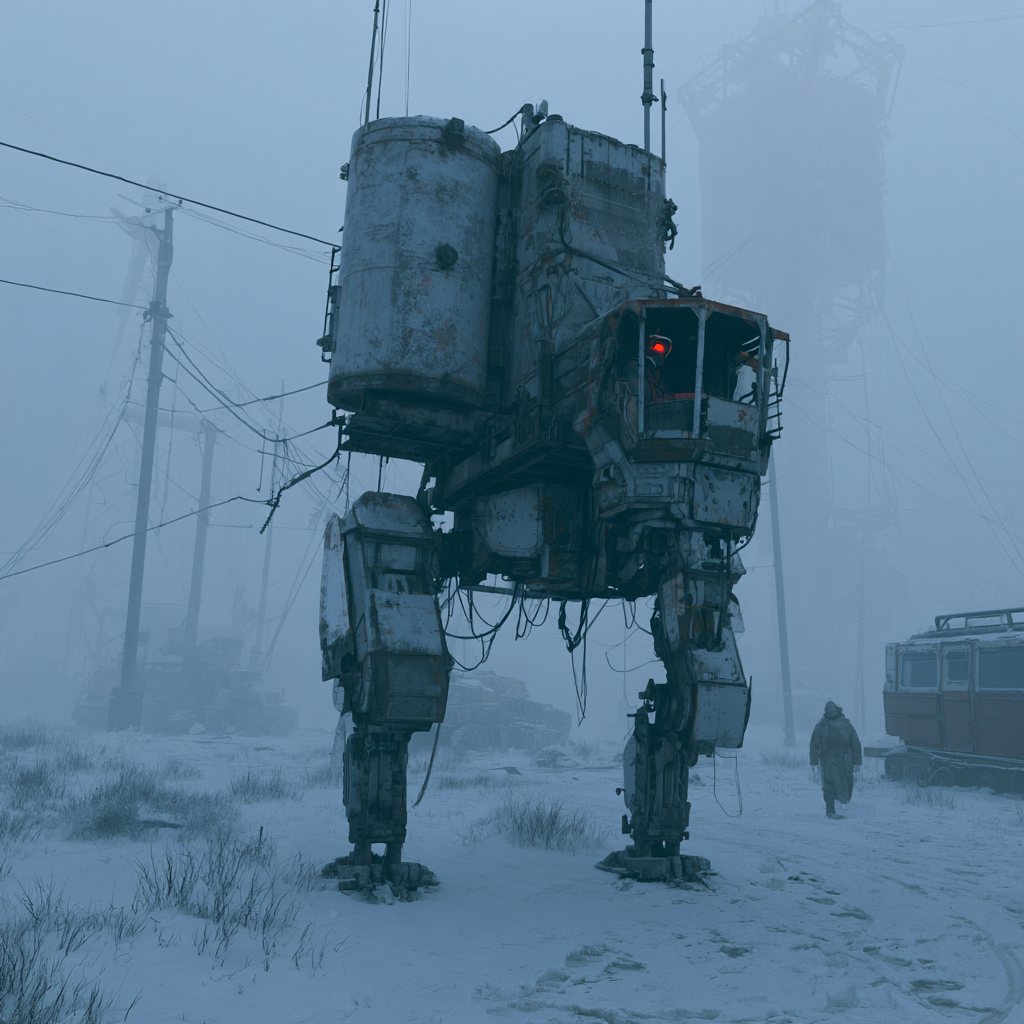
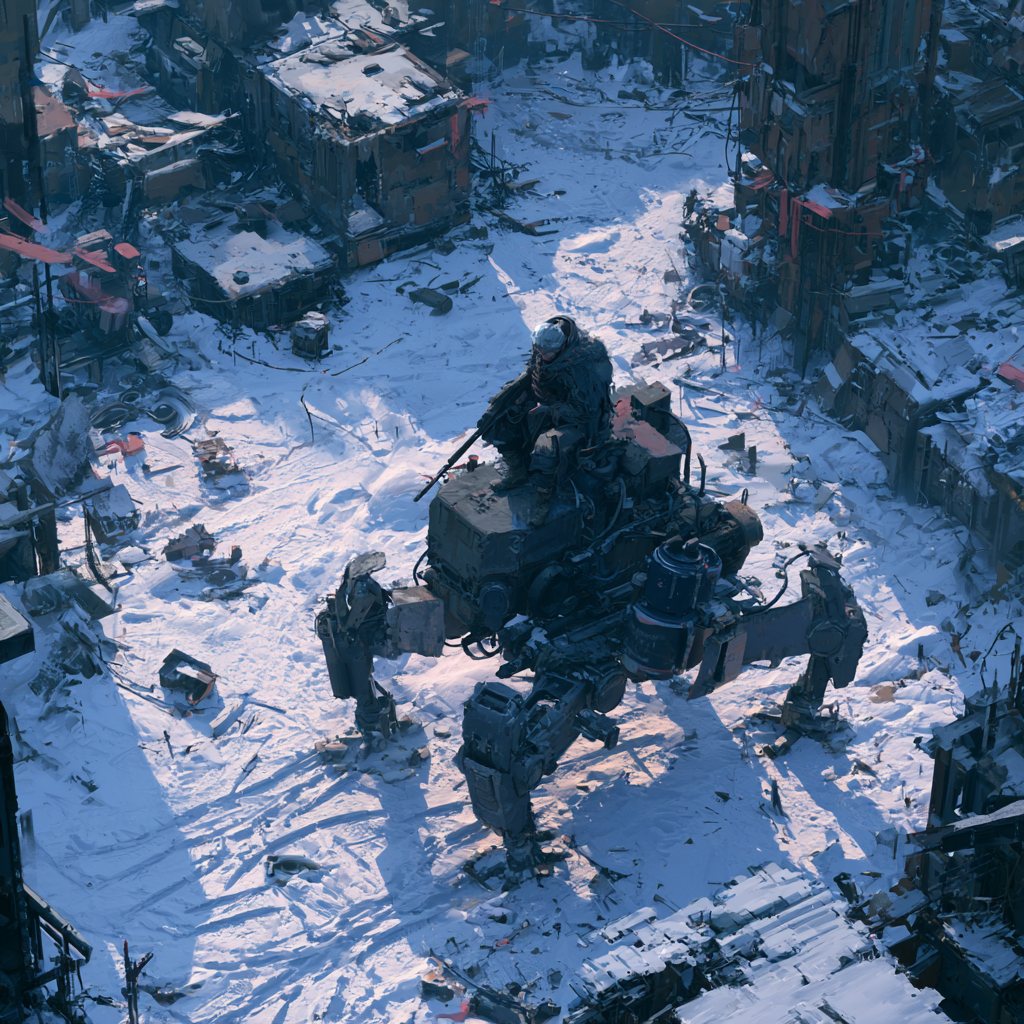
A hulking, cobbled-together machine that serves as your transport, your combat platform, and your mobile base. It starts broken. You earn every upgrade by scavenging the most dangerous corners of the map.
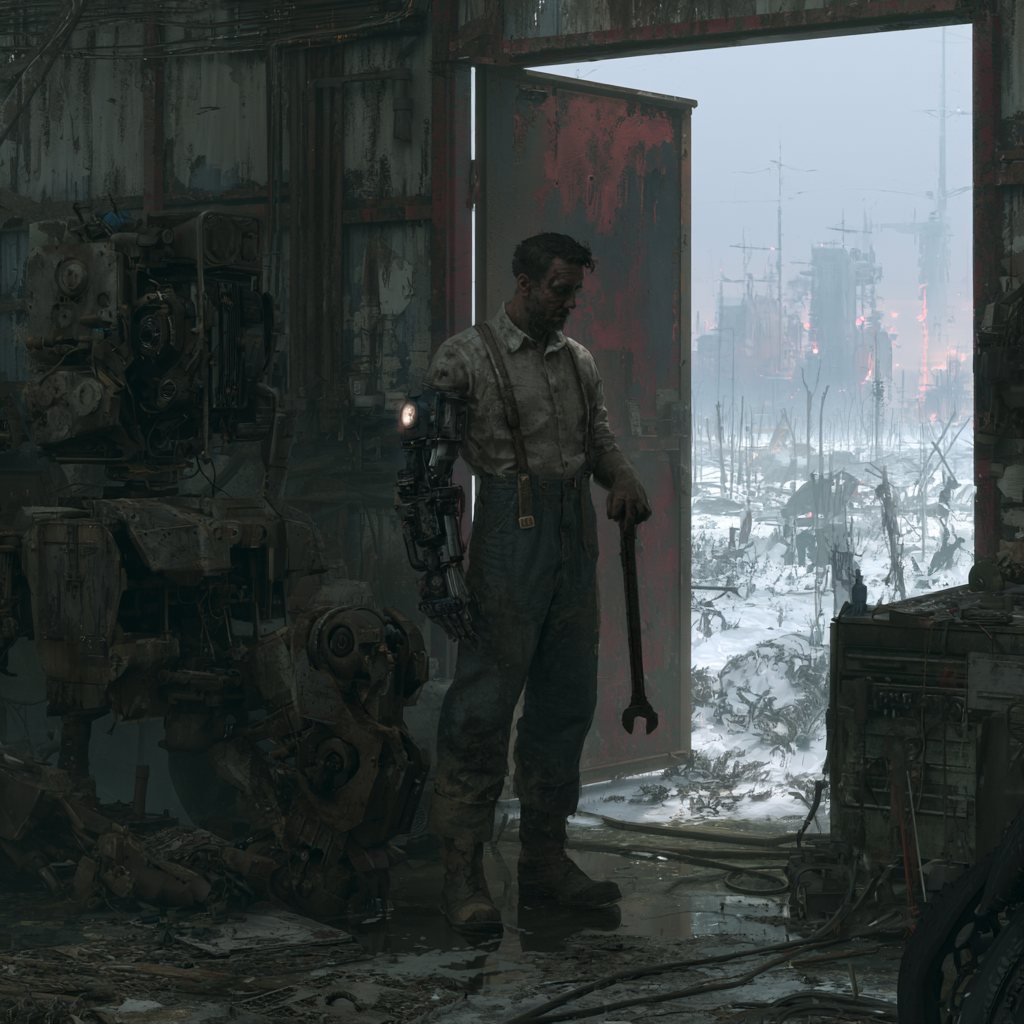
The mech is fully modular — every component is a discrete entity with stats, visual representation, and wear state. Swap legs for treads. Bolt on new weapons. Mount defensive plating scavenged from a ruined factory. Every mech becomes a reflection of where you've been and what you've survived.
And because mech parts degrade and break in combat, you're always one bad fight away from being stranded on foot in a blizzard. Being without the mech is a meaningful degraded gameplay state, not a brief inconvenience.
This isn't survival-lite with a hunger bar you occasionally top off. Desolation Engine models nutrition, body temperature, pain, illness, and addiction — all interlocking, all compounding.
Solving one problem can worsen another. Your gear has real weight, and that weight affects stamina, speed, and how many swings of a hammer you can take before you're gasping. Backpacks can be dropped mid-combat to move faster — a mechanic that creates genuine tactical moments.
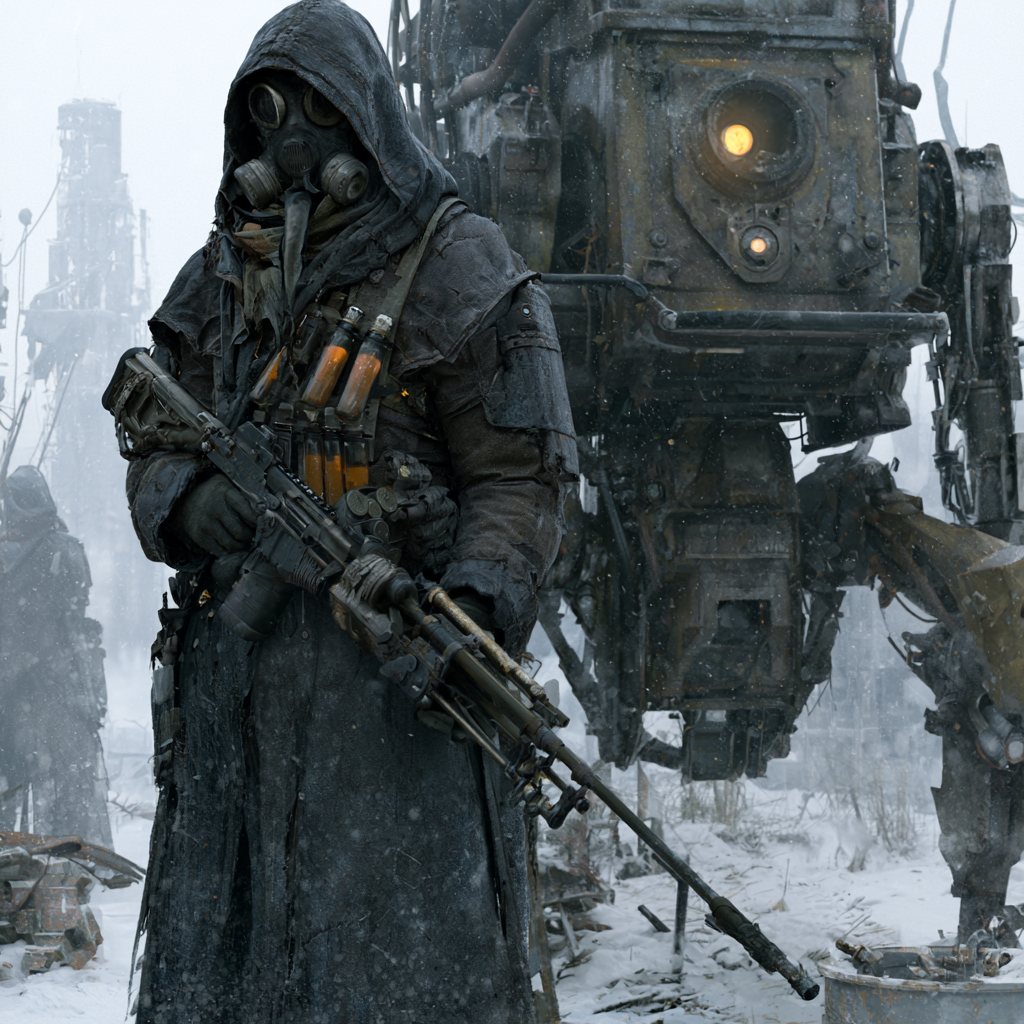
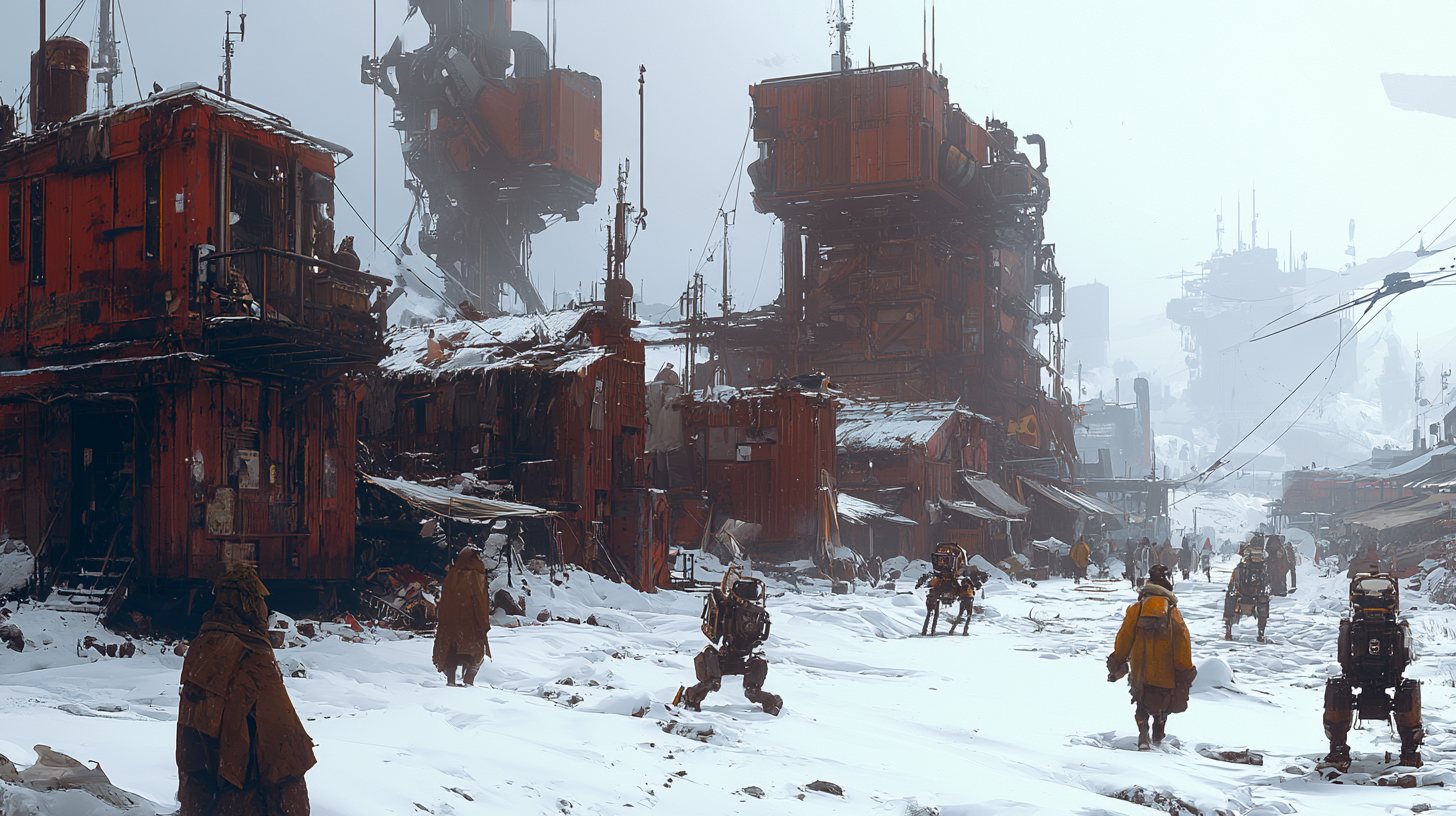
The environment itself is hostile. Blizzards reduce visibility to nothing. Crevasses swallow the careless. Nights are long and cold. The weather isn't atmosphere — it's a gameplay system that changes how you approach every expedition.
There's no auto-aim, no hitscan — projectiles have travel time influenced by weapon accuracy and your character's skill. Every fight risks damage to your gear and your mech, and repairs cost resources you might need to survive the journey home.
Enemies are smart. AI opponents prioritize cover, seek high ground, and retreat when wounded. You'll face hostile scavengers, mutated wildlife, and massive artillery mechs flanked by drone scouts. Take out a mech's sensor drones and it fires blind — that kind of emergent tactical play is baked into the design.
There are no classes. Your build comes from the traits you choose at creation, the skills you learn from trainers and books scattered across the wasteland, and the gear you carry. A gunslinger who eats less and moves light plays completely differently from a heavy melee brawler in power armor.
Every settlement runs its own economy. Scrip is the post-collapse currency — genuinely scarce, locally trusted. There's no global market, no fixed prices, and no merchant who hasn't heard of you.
Trade is a relationship system. Inventories reflect what each merchant has actually scavenged. Prices reflect what they think you can afford and what they think of you. A trader who's been told you cheated someone in a neighbouring camp prices you accordingly. A trader you've defended from a raid carries items they wouldn't sell to anyone else.
Buying becomes a form of social positioning. Who you trade with says where you stand.
Crafting and cooking aren't menus. Both are physical activities at specific stations: a campfire, a forge, a workbench. Each station is a real-world object you build or find, requiring fuel, time, and the right tools.
Recipes are knowledge, not inventory. Your pawn learns recipes from books, mentors, and trial-and-error in the wilderness. When that pawn dies, recipes drop as a tangible data shard alongside the body — recoverable, losable, tradeable. The next pawn doesn't auto-inherit what the last one knew.
Cooking specifically matters: hot meals warm the body and lift the mood. Eating cold rations keeps you alive but doesn't keep you sane.
Factions are not static map-fillers. Each has goals it pursues across the calendar — territorial ambitions, resource demands, internal politics — and acts on them whether the player is involved or not.
Settlements have viability scores that tick against weather, faction relations, and resource depletion. When viability falls, populations migrate — pack up, walk across the map, and reseed somewhere new. Possibly closer to you. Possibly into the territory of someone they used to be at war with.
The sabotage system gives you tools to intervene without combat. Cripple a generator, block a fuel line, blow the seal on a heat exchanger. A noise profile determines whether you're caught. A technician AI determines whether the damage gets repaired before it cascades. Patient violence — the cold takes care of the rest.
Negotiation matters too. Faction dialogue is gated behind reputation and tradeoffs. Broker peace. Play sides. Betray both, walk into the smoking ruins, and pick clean.
A grounded, horror-inflected take on psychic ability. Dune Navigators, not Warhammer battle-mages: small powers, permanent costs, slow deterioration, and a world that reacts with fear or reverence when it sees the signs.
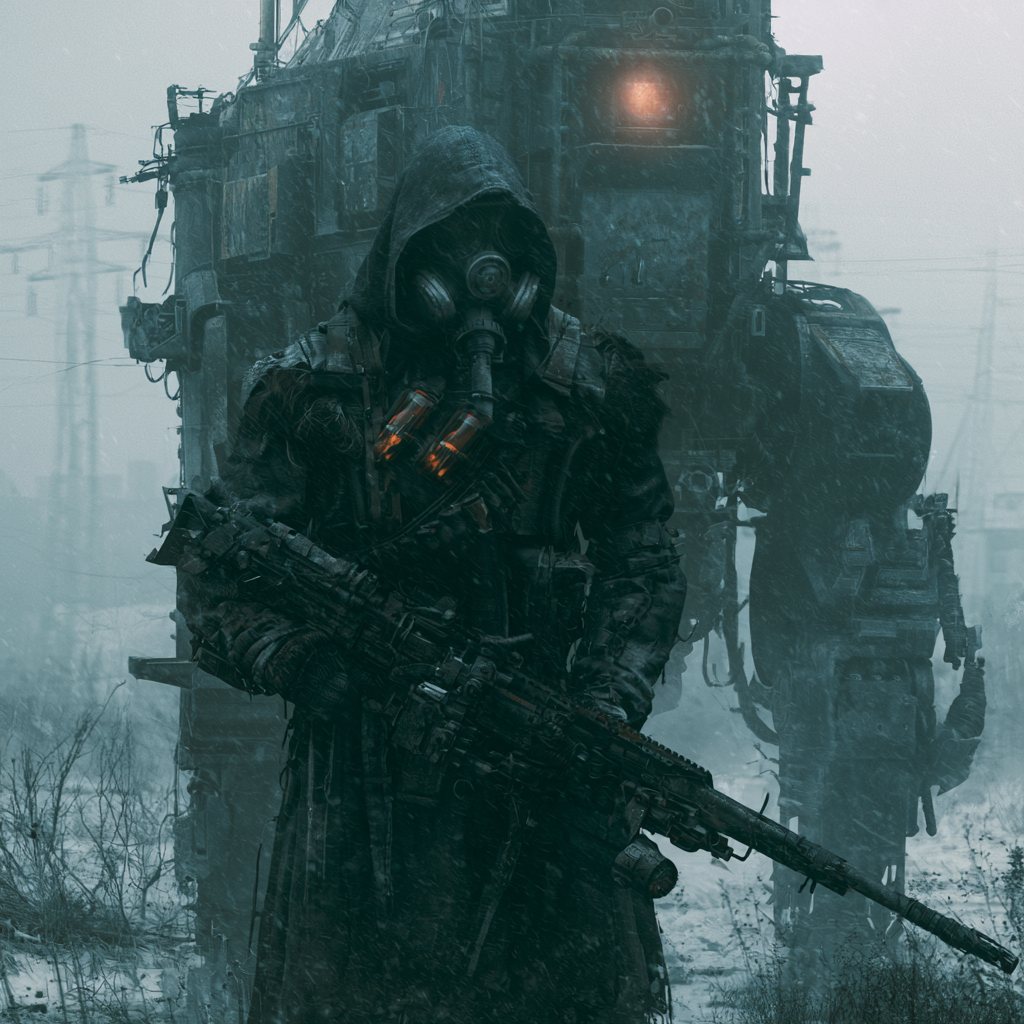
Extended perception. Feel life signs through walls, read emotional residue from objects, perceive nearby threats through fog and darkness. Cost: gradual vision degradation.
Crude telekinetic force. Throw someone off their feet, jam a heavy door, retrieve a dropped item. Cost: muscle and tendon damage in arms and back.
Generating heat from within. The most obvious survival utility in an eternal winter — but using Burn to stay warm is a trap. Cost: skin, internal organs, massive nutrition drain.
Psychic imprinting from objects or locations. Touch a corpse and get fragments of their final moments. The primary lore-delivery mechanism for the Wrought. Cost: chronic migraines.
Dampening other Wrought — or, more interestingly, suppressing yourself. A character who refuses to use their gift walks at half the risk. Cost: passive nutrition drain.
Rustblight is the degenerative condition that begins the first time you use a power. Incurable. Manageable. Late-game Wrought are living on borrowed time, and the player feels every power they spend.
If a player finishes a Wrought run and says "I wouldn't do that again," the system is working.
When you die, the world keeps going. Your old character's body stays where it fell, along with all their gear and their mech.
You create a new survivor who picks up a distress beacon pointing to the remains of whoever came before. Time passes between deaths — and how much time has passed changes what you find when you get there. The mech may have been scavenged. A faction may have moved through. A creature may have made a den of the cockpit.
This creates a roguelike tension layered over a persistent world. Every life matters, but death isn't a hard reset — it's a new chapter.
If the player chooses not to recover the body — or cannot reach it — the new pawn starts that chapter blind. The calendar has moved on. The knowledge is lost unless it can be reacquired from surviving sources in the world.
The endings are read out of the simulation at the moment of resolution. What determines the ending is a set of world-state variables: which factions are alive, what their relationship to the player is, whether the player has accumulated the necessary knowledge, and how much time has passed.
| # | End State | What it requires |
|---|---|---|
| 01 | Escape | Mech fully repaired; player finds an exit route. The truth behind The Dimming undiscovered. Always available as a baseline. |
| 02 | Witness | The player uncovers what is really behind The Dimming. They cannot stop it. They document and transmit what they learned. Requires deep faction/NPC access. |
| 03 | Intervention | The player acts on the discovery — sabotage, alteration, or interface. Requires the simulation to be healthy enough that the necessary factions still exist and trust the player. |
| 04 | Acceleration | The player's actions hasten the very thing they were surviving. The simulation has collapsed below the threshold where constructive action is possible. Tragic, not punishing. |
| 05 | The World Moves On | The player dies too many times; time passes beyond a terminal threshold. The game ends not with a climax but with a final journal entry, found by no one. |
No ending is locked behind a single choice. They emerge from the accumulated state of the run.
Devlogs, system breakdowns, and screenshots as they emerge from the snow.